Science

Science & Research

The Science of Truth Verification

How can we measure credibility? The answer begins with the body’s natural responses to thinking, remembering, and answering questions. Through years of scientific research, Converus has developed technology that measures involuntary eye behavior and uses those measurements to assess credibility.

Explore the science behind credibility assessment, how Converus technology works, how tests are designed, and how these methods are used in real-world applications.

Section 01

How Lie Detection Works

The human body responds to cognitive activity. Understanding these physiological responses is the foundation of modern credibility assessment.

Telling a lie can take more mental effort than telling the truth. A person may need to remember what really happened, create a different story, and make sure the details stay consistent. That extra mental work can affect how the brain and body respond.

Scientists have studied these responses for decades. During a carefully designed test, specialized instruments can measure changes in the body and behavior while a person answers questions. The goal is to identify patterns that may help distinguish truthful responses from deceptive ones.

Five Types of Signals Researchers Can Measure

Different testing methods look at different responses.

♥

Heart & Circulation

Changes in heart rate and blood pressure.

≋

Breathing

Changes in breathing rate and patterns.

〰

Skin Response

Changes in skin conductance related to sweat gland activity.

◎

Eye Behavior

Changes in pupil size, blinking, and eye movements.

Aa

Reading & Responses

How quickly and accurately someone reads and answers questions.

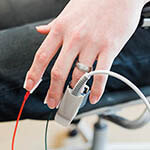
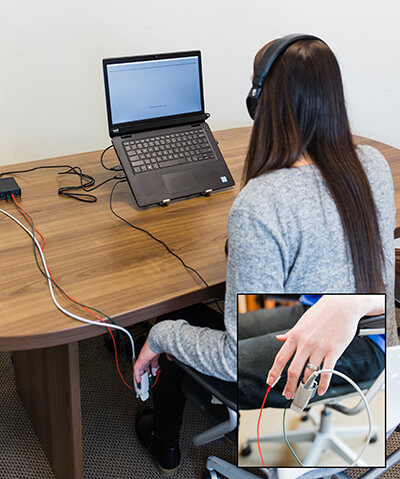
Example of physiological measurements recorded during a polygraph test

From Body Responses to Measurable Data

A polygraph, for example, uses sensors to record changes in breathing, cardiovascular activity, and skin conductance. Those measurements appear as lines or tracings that can be examined and compared as a person answers questions.

The important information is not simply whether a response occurs. It is how the responses change in relation to the questions being asked.

Does a physical reaction mean someone is lying?

Not by itself. Nervousness, excitement, stress, and other factors can affect the body too. No single response is a guaranteed sign of deception. Credibility assessment looks at patterns of responses under controlled testing conditions and considers how those responses relate to specific questions.

A Different Way to Measure

Traditional polygraphs measure several physical responses. But what if we could measure the body’s response to mental effort by looking at the eyes? That’s the idea behind the science that led to Converus technology.

Section 02

How Our Technology Works

Converus technology measures involuntary eye behavior and uses computer-based analysis to evaluate responses during a credibility assessment.

Converus technology focuses on the eyes. When a person thinks, remembers, reads, and answers questions, the eyes make small movements and changes that can be measured. Some of these changes happen automatically, without the person consciously controlling them.

During a test, an optical camera tracks these eye behaviors while the person responds to a series of questions. The measurements are collected and analyzed by software to identify patterns associated with increased mental effort.

What Does the Technology Measure?

The eye tracker monitors several behaviors while a person completes a test.

◉

Pupil Size

The pupil changes size as the brain responds to different levels of mental effort.

↔

Eye Movements

The system tracks how the eyes move as a person looks at and processes information.

◡

Blinking

The frequency and timing of blinks can change during different mental tasks.

A

Reading Behavior

The system analyzes where and how long a person looks at information, along with reading and response patterns.

From Eye Movements to a Result

The eye tracker collects measurements throughout the test. The software evaluates those measurements alongside the person’s answers and the questions being presented.

A computer-based scoring model analyzes the combined data and produces a Converus Credibility Score. This makes it possible to evaluate complex patterns of eye behavior using a consistent, automated process.

VerifEye mobile truth verification technology

One Scientific Foundation. Different Testing Environments.

Converus applies eye-tracking technology in both dedicated testing stations and mobile devices.

A participant taking an EyeDetect test at a testing station

EyeDetect

EyeDetect uses a dedicated testing station with an infrared eye-tracking camera. Participants read and answer questions on a computer while their eye behavior is measured.

VerifEye mobile testing using a smartphone

VerifEye

VerifEye applies eye-tracking technology through a standard smartphone camera. A mobile app guides the participant through the test while the phone measures eye behavior and records verbal answers.

What About EyeDetect+?

EyeDetect+ combines eye-tracking measurements with additional physiological measurements, including cardiovascular activity, breathing, and skin conductance. It brings the eye-based technology and additional polygraph-style measurements together in one automated testing system.

The Technology Is Only Part of the Test

Measuring eye behavior is one part of the process. The questions, test structure, and testing procedures also matter. Next, let’s look at how a Converus test is designed and administered.

Section 03

How a Converus Test Works

A credibility assessment is more than a series of questions. Test topics, question wording, and established protocols all play an important role in the process.

A credibility assessment is more than a list of questions. A well-designed test starts with a clear purpose, uses carefully written questions, and follows a structured process. The questions give the technology something specific to measure, while the testing procedure helps ensure each person completes the test under consistent conditions.

Converus offers different testing protocols for different situations. Some tests examine general behaviors, such as workplace theft or drug use. Others focus on a specific incident, such as a missing item or an allegation of misconduct.

Two Common Reasons to Test

01 · Screening

Is there a behavior of concern?

Screening tests ask about broader topics when there is no single known incident being investigated. They are often used in employment screening or periodic evaluations.

Example topic

Have you used illegal drugs during the past 90 days?

02 · Diagnostic

What happened in a specific incident?

Diagnostic tests focus on a known incident or allegation. The questions are written around the specific behavior or event being investigated.

Example topic

Did you take money from the company safe last Friday?

Illustration of a multi-issue comparison test

Why Do Tests Use Different Types of Questions?

A test includes relevant questions about the behavior being evaluated. These questions are the main focus of the assessment.

Many test formats also include comparison questions. These address other behaviors and provide a reference point for evaluating how a person responds to the relevant questions.

The testing algorithm evaluates response patterns across the different question types. The comparison is part of what gives the results context.

What Makes a Good Test Question?

Good questions are specific, understandable, and focused on actions a person can clearly remember.

01

Specific

Focus on a clear action or behavior, not a broad idea.

02

Personal

Ask about the participant’s own actions and experiences.

03

Time-Bound

Use a defined time period when it helps clarify the topic.

04

Clear

Avoid confusing, subjective, or emotionally charged language.

Test topics should also be distinct from one another. Questions about opinions, intentions, emotions, or another person’s actions are generally not appropriate for these protocols.

What Happens During a Test?

The exact steps depend on the product and test protocol, but most follow the same general progression.

1

Prepare

The test topic is selected, questions are prepared, and the participant receives instructions about the process.

2

Practice

The participant becomes familiar with the instructions, question format, and how to respond.

3

Take the Test

Questions are presented while the system records eye behavior and the participant’s responses.

4

Analyze Results

The measurements and answers are analyzed to produce a Converus Credibility Score and test report.

What Does the Result Mean?

After the test, the collected data is analyzed and a Converus Credibility Score is generated. The score indicates the system’s assessment of the participant’s responses in relation to the test topics. It is a tool for evaluating credibility—not a substitute for investigating evidence, considering context, or making a final decision.

Want to explore the different test formats, protocols, and available topics? Visit the Converus Testing Resources or browse examples on the Types of Tests page.

Putting the Pieces Together

The science, the technology, and the test design all work together. The next section looks at how Converus brings these pieces into practical testing solutions for different environments and needs.

Section 04

Putting It All Together

Combining scientific research, automated technology, and structured testing makes credibility assessment accessible in a wide range of environments and applications.

Scientific research provides the foundation. Eye-tracking technology collects the measurements. Carefully designed tests give those measurements context. Converus brings these pieces together in automated systems that make credibility assessment faster, more consistent, and available in a variety of settings.

The technology is designed to support people who need to make important decisions. It provides another source of information that can be considered alongside interviews, background checks, investigative findings, and other screening tools.

Turning Science into a Practical Tool

⚙

Automated

Computers present test questions, collect measurements, and analyze responses using established scoring methods.

✓

Standardized

Structured protocols and consistent instructions help tests follow the same procedures from one participant to another.

⌖

Flexible

Testing can take place at provider offices, organizational facilities, regional locations, or through a compatible mobile device.

▤

Documented

Test results and reports are made available to authorized users through Converus reporting tools.

Converus EyeDetect testing station

Consistent Testing. Computerized Analysis.

Traditional testing methods often depend on an examiner to present questions, interpret recorded measurements, and determine a result. Converus technology automates much of that process.

Test instructions, question presentation, data collection, and scoring follow established computer-based procedures. The software applies its scoring model to the recorded information, reducing differences that can result from manual scoring.

The result is a more consistent and repeatable process. Trained professionals still play an important role in selecting appropriate tests, preparing participants, and interpreting results in context.

Testing Beyond the Lab

Credibility assessment can be used in many environments. Converus systems are designed to bring testing closer to the organizations and people who need it.

EyeDetect testing station

Dedicated Testing Stations

EyeDetect and EyeDetect+ stations can be installed at provider offices or organizational facilities. Portable equipment also allows testing to be conducted at regional and remote locations.

Participant taking a VerifEye test on a smartphone

Mobile Testing

VerifEye uses a compatible smartphone, allowing participants to complete a test without traveling to a dedicated testing station.

Participant completing a computer-based credibility assessment

Service Provider Network

Organizations and individuals can work with authorized Converus service providers to arrange testing and receive support with the process.

Three Ways to Deliver the Technology

Each Converus product applies the science in a different testing format, with different measurement capabilities.

EyeDetect logo

EyeDetect

A non-contact, computer-based credibility assessment using eye tracking.

Measures: Eye behavior and reading patterns

Format: Computer and infrared camera

Best known for: Fast, non-contact testing

Explore EyeDetect →

EyeDetect logo

EyeDetect+

An automated polygraph combining eye tracking with additional physiological measurements.

Measures: Eye behavior and physiological activity

Format: Computer, eye tracker, and Physio Tracker sensors

Best known for: Automated polygraph testing

Explore EyeDetect+ →

VerifEye logo

VerifEye

A mobile credibility assessment that uses a standard smartphone camera.

Measures: Eye behavior and reading patterns

Format: Smartphone app and camera

Best known for: Flexible mobile testing

Explore VerifEye →

Successive Hurdles: Combining Different Measures

Some situations call for more than one way to evaluate credibility. Successive hurdles is a model that combines results from different testing methods on the same topic. Rather than relying on one type of measurement, it considers information from methods that examine different responses.

First Measure

EyeDetect

Measures cognitive responses through involuntary eye behavior and reading patterns.

+
Second Measure

Polygraph

Measures physiological responses such as cardiovascular activity, breathing, and skin conductance.

→
Combined Information

Greater Context

When independent methods produce agreeing results, the combined evidence can provide additional confidence.

The statistical value of combining results depends on the accuracy of each method and the degree to which their measurements are independent. Successive hurdles is not a guarantee, and combined confidence should be calculated using appropriate assumptions.

Learn more about the successive-hurdles model →

One Part of a Bigger Picture

Credibility assessment is most useful when it supports a well-rounded process. Organizations may combine testing with background investigations, interviews, reference checks, document reviews, drug screening, and other evidence.

Each tool answers a different question. A background check may reveal a person’s history. An interview may help explain an event. A credibility assessment provides another way to evaluate responses about specific behaviors or incidents.

Converus truth and deception measurement illustration

Where Can These Tools Be Used?

The technology can be applied to many different questions and situations. From employment screening and law enforcement to internal investigations and personal matters, the next section looks at the different ways credibility assessment is used.

Section 05

Applications of Credibility Assessment

Credibility assessment can support decisions in many different settings. From employment screening and internal investigations to law enforcement and personal applications, testing can be adapted to address a variety of questions and needs.

Questions about honesty and trust come up in almost every part of life. Employers want to know who they are hiring. Investigators need to understand what happened. Government agencies must evaluate potential risks. Financial institutions need to protect customers and assets. Even individuals sometimes need answers to difficult personal questions.

Credibility assessment can help address these questions. Converus technology is used in a wide range of settings, from employment screening and workplace investigations to public safety, government security, and personal applications. The test can be designed around the specific behavior or concern an organization needs to evaluate.

Where Can Credibility Assessment Be Used?

Here are just a few examples of the questions Converus technology can help organizations and individuals address.

Public Safety

Law Enforcement

Screen police applicants, evaluate backgrounds, and support investigations involving theft, assault, fraud, and other alleged crimes.

Corrections & Treatment

Supervision & Rehabilitation

Support supervision and treatment programs by evaluating specific behaviors, compliance concerns, and disclosures relevant to an individual’s case.

Government & Security

Personnel & Security Screening

Evaluate applicants and personnel for security-related concerns, including undisclosed activities, espionage, sabotage, and other potential threats.

Business & Industry

Employee Integrity

Screen job applicants, evaluate employee compliance, and investigate concerns involving workplace theft, bribery, fraud, and misuse of company information.

Financial Services

Fraud & Financial Risk

Examine concerns involving unauthorized transactions, financial misconduct, document fraud, and the misuse of financial resources.

Transportation & Logistics

Workforce & Asset Protection

Address concerns involving cargo theft, fuel theft, employee misconduct, and the protection of vehicles, equipment, and other valuable assets.

Private Security

Trust & Risk Management

Evaluate applicants and personnel, investigate security incidents, and address concerns about access, trust, and responsible conduct.

Personal Applications

Personal Questions

Address personal concerns involving relationship trust, infidelity, or other specific questions where an individual wants more information.

One Technology. Many Different Questions.

The technology can be adapted to different applications through carefully designed test topics and protocols. A test for a job applicant is not the same as a test about a specific theft or security incident. The questions and procedures are selected to fit the purpose of the assessment.

Explore What Converus Can Do

Every organization has different questions and needs. Start with the resources below to learn more about available applications and testing options.

Explore Our Solutions

See how Converus technology can support different industries, organizations, and professional needs.

View Solutions →

Browse Test Topics

Explore examples of available tests and the kinds of questions a credibility assessment can address.

View Test Topics →

Talk with Converus

Have a particular application in mind? Our team can help you understand which products and testing options may fit your needs.

Contact Sales →

Better Information. More Informed Decisions.

Converus brings scientific research and practical technology together to help people evaluate credibility. Whatever the question, the goal is to provide another useful source of information when the answers matter.